
Birch Sports Flooring Manufacturer: Production & Wood
How Chinese Maple Sports Flooring Manufacturers Structure Their Production Lines — and Why It Matters for Buyers
Production line architecture tells you more about a manufacturer than any brochure ever will. Chinese maple sports flooring manufacturers — and many birch sports flooring manufacturer operations running inside the same regional supply ecosystems — typically build their facilities around three distinct tiers: raw material processing, core panel assembly, and surface finishing. Where a specific supplier sits within that chain has direct, real consequences for lead times, pricing, and quality consistency.
Fully vertically integrated facilities control everything from kiln-drying the lumber to applying the final court-line lacquer — all in-house. That matters for procurement because it cuts down the number of handoff points where quality can slip. It also usually means tighter tolerances on moisture content, which is genuinely critical for hardwood sports flooring going into climate-variable environments. Partially integrated operations, by contrast, outsource one or more stages — commonly veneer slicing or UV-curing finish lines — to third-party sub-suppliers.
Neither model is inherently worse. But buyers need to ask the right questions before anything gets signed.
- Where does the raw timber come from, and does the manufacturer own or just contract that supply relationship?
- Is kiln-drying done on-site or handled externally — and what are the documented moisture content targets at each stage?
- Which production stages carry ISO, FIBA, or EN certification, and do those certifications cover the full process or just specific sub-processes?
- What’s the realistic monthly production capacity, and how does that translate to MOQ commitments and buffer stock availability?
- Are the finishing lines dedicated to sports flooring, or shared with general hardwood products that run to completely different specs?
That last question — the shared-line question — is especially worth pressing when you’re evaluating a birch sports flooring manufacturer. Here’s why: birch and maple behave differently under finishing conditions. Birch’s tighter grain can respond unevenly to certain lacquer formulations if line settings aren’t properly adjusted between runs. A manufacturer pushing mixed species through a single finish line without documented process separation? That’s a procurement risk worth flagging hard, well before contracts come into play.
Production line structure also shapes how a supplier handles custom orders — surface textures, shock absorption underlayer specs, bespoke panel dimensions. That’s exactly where procurement negotiations tend to get complicated, fast.
What a Modern Maple Sports Flooring Production Line Actually Looks Like in China
Chinese sports flooring facilities — particularly those operating at export scale — have undergone significant retooling over the past decade. What a buyer encounters during a factory audit today looks considerably different from the older batch-processing setups that dominated the industry earlier. Understanding that distinction matters when you’re qualifying a birch sports flooring manufacturer for a large-volume contract.
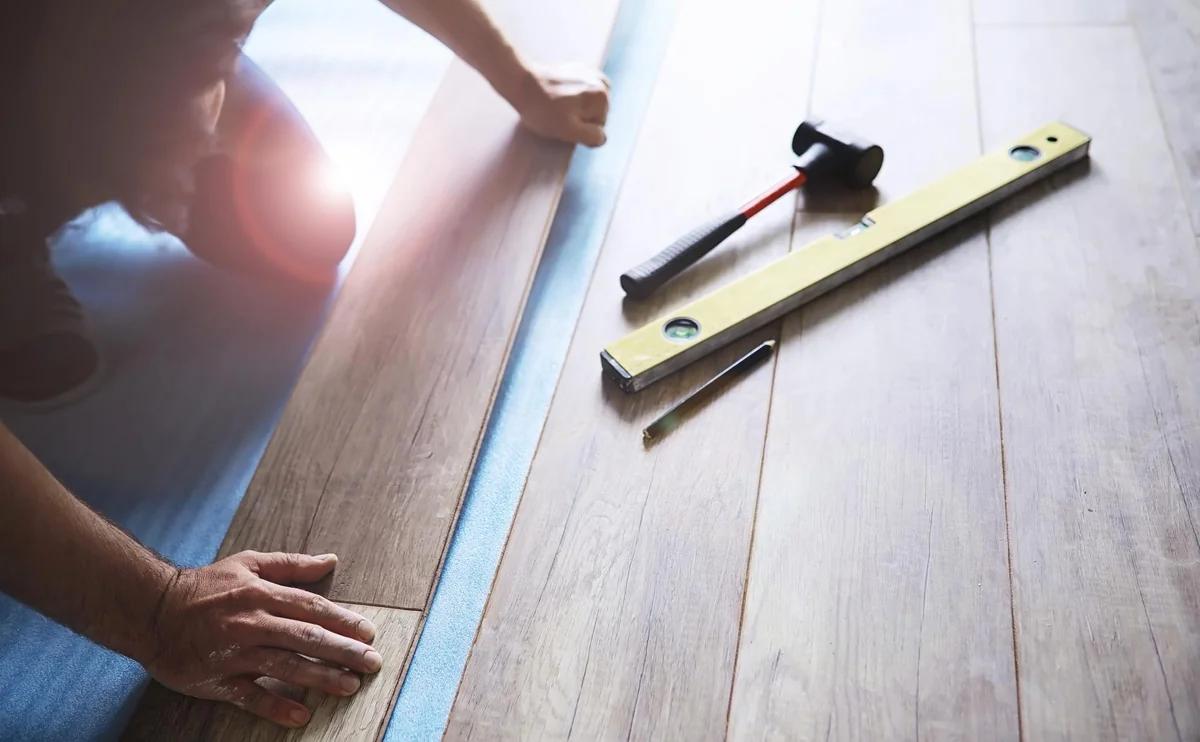
A modern production line typically runs as a continuous, staged system rather than a series of disconnected processes. Raw timber — whether maple, birch, or a combination — enters at one end and moves through kiln drying, milling, grading, lamination, and finishing in a sequenced flow. The critical variable for procurement purposes isn’t the equipment age; it’s whether the line has been configured with species-specific parameters at each stage, or whether it runs a generalized setting across all wood types.
For birch specifically, the milling and grading stages carry more risk than buyers sometimes anticipate. Birch’s natural density variation — even within a single plank — means that automated grading systems need calibration profiles tuned to birch’s characteristics, not maple’s. A facility running both species should be able to show documented calibration records for each. If that documentation doesn’t exist or can’t be produced quickly during an audit, that’s a meaningful gap in quality control.
Finishing lines are where the separation between capable and marginal suppliers becomes clearest. UV-cured lacquer systems, slip-resistance texture rollers, and shock-absorption underlayer bonding stations all require species-adjusted settings. The table below outlines what a well-structured production line should include — and what absence signals about a supplier’s actual capability:
| Production Stage | What to Expect from a Capable Supplier | Red Flag |
|---|---|---|
| Kiln Drying | Species-specific moisture targets, logged per batch | Single universal drying cycle for all wood types |
| Automated Grading | Calibration profiles documented per species | No grading records available on request |
| UV Finish Line | Adjustable cure settings, lacquer formulation logs | Fixed settings regardless of species or panel density |
| Underlayer Bonding | Shock absorption spec verified per panel run | Underlayer sourced externally with no QC integration |
Production line transparency is, ultimately, a proxy for operational discipline. A birch sports flooring manufacturer that can walk an auditor through each stage — with records, not just verbal assurances — is demonstrating the kind of process control that translates directly into consistent product quality across high-volume orders.
How Automation Levels Affect Consistency, Lead Times, and MOQ Minimums
Automation level is one of the more telling indicators of what a birch sports flooring manufacturer can actually deliver at scale — and it affects three procurement variables more than any other: batch-to-batch consistency, lead time reliability, and minimum order quantity thresholds.
Facilities running semi-manual production lines tend to introduce more variability at the milling and finishing stages. Individual operator judgments around sanding pressure, lacquer application, or underlayer bonding can shift from shift to shift. For a procurement manager ordering across multiple facilities or phased construction timelines, that variability isn’t abstract — it shows up as visible tone differences between floor panels installed weeks apart, or shock absorption readings that don’t match the spec sheet from the original sample run.
Highly automated facilities — those with CNC milling, inline moisture sensing, and UV cure lines with documented lacquer formulation logs — tend to hold tighter tolerances across large runs. The tradeoff worth understanding, though, is that capital-intensive automation often comes with higher MOQ minimums. The machinery has to run at volume to justify its operating cost, so manufacturers at this end of the spectrum may set floor orders at several thousand square meters. That’s a practical constraint for smaller venues or phased rollouts.
Lead times follow a similar pattern. Automated lines generally move faster once a job enters production — but scheduling access to those lines can carry longer pre-production queues, particularly during peak construction seasons. Semi-automated manufacturers may offer shorter queues and more flexible scheduling, at the cost of less predictable output consistency.
The practical framework for procurement decisions looks roughly like this:
- For large, single-phase projects where consistency across the full floor area is critical — automated production is the lower-risk option, MOQ constraints notwithstanding.
- For phased projects or smaller venues, a mid-tier birch sports flooring manufacturer with documented process controls and moderate automation may offer better scheduling flexibility without sacrificing the core quality benchmarks.
- In either case, request production batch records — not just product specs — before committing to a supplier relationship.
Automation level, in short, isn’t a quality ranking. It’s a procurement fit variable — one that has to be matched against project scale, timeline structure, and how much consistency risk the buyer can realistically absorb.
Red Flags to Spot When Auditing a Chinese Manufacturer’s Facility
Facility audits are where supplier claims get tested against reality — and for a birch sports flooring manufacturer, the gap between what’s presented in a product catalog and what’s actually happening on the production floor can be significant. Procurement teams who know what to look for rarely get caught out. Those who treat the audit as a formality often do.
The wood handling area is usually the first place to scrutinize. Birch is moisture-sensitive by nature, and any manufacturer that doesn’t maintain controlled humidity in its raw material storage is already cutting corners at the source. Logs or veneers stacked directly on concrete floors, inadequate separation between material batches, no visible climate monitoring equipment — these aren’t minor housekeeping issues. They’re indicators of systemic quality risk that will show up later as warping, delamination, or dimensional instability after installation.
- Kiln drying records that are incomplete, unavailable on request, or inconsistent with the claimed moisture content of finished product
- No visible separation between production-grade and reject-grade material — or worse, no visible reject process at all
- Adhesive and finish chemicals stored without proper labeling, temperature control, or compliance documentation
- Assembly lines where manual and automated processes are mixed without clear quality checkpoints between stages
- Finished goods warehousing that shows no batch identification — making traceability from production run to shipment impossible
- Certification documents displayed on walls but staff unable to explain what standard the facility is actually certified to
That last point matters more than buyers often expect. A birch sports flooring manufacturer may display FIBA, EN 14904, or DIN certification references prominently — but certification scope is specific. A facility certified for one product category or one production line isn’t automatically certified across its full range. Asking the facility manager to walk through exactly which products are covered, and which test reports correspond to which SKUs, will quickly reveal whether the documentation is operational or decorative.
Pay attention to how the facility handles your questions, too. Hesitation around batch traceability, deflection when asked for third-party inspection reports, or an inability to produce current calibration records for testing equipment — these are process transparency failures. They don’t necessarily mean the product is bad. But they do mean the supplier cannot verify that it isn’t.
Conclusion
The documentation question is the whole game. Any birch sports flooring manufacturer can put logos on a brochure — what separates a reliable supplier from a risky one is whether they can hand you a current test report, tell you exactly which product it covers, and answer follow-up questions without stalling.
Don’t let polished marketing do the work that paperwork should do.
If a facility gets defensive when you ask basic traceability questions, that’s your answer — and it’s a cheaper lesson to learn before the contract than after installation.
Frequently Asked Questions
Q: What should I look for when choosing a birch sports flooring manufacturer?
A: Third-party test documentation is the first filter — any birch sports flooring manufacturer worth considering should be able to hand you current, product-specific reports covering shock absorption, surface friction, and ball rebound without making you ask twice. Beyond that, look for clear traceability: which mill sourced the birch, which batch was tested, and whether the spec sheet matches what’s actually being quoted. Marketing materials tell you nothing; paperwork tells you everything.
Q: Why is Baltic or European birch used instead of other hardwoods for sports floors?
A: Birch has a tight, consistent grain structure that resists the kind of localized compression you get from repeated athletic impact — other hardwoods can be harder on paper but less uniform across a full panel. The multiple-ply construction typical of sports-grade birch also distributes load more evenly than solid-sawn alternatives, which matters a lot in multi-use facilities where the floor takes abuse from multiple directions daily.
Q: How much does birch sports flooring typically cost?
A: Material costs vary widely depending on panel thickness, finish grade, and whether the birch sports flooring manufacturer offers a turnkey installation package or supply-only pricing. As a general range, professional-grade maple or birch sports floors run from roughly $8 to $20+ per square foot installed — but that spread is enormous for a reason. Subfloor prep, finish coats, and line marking are often quoted separately, so always ask for a fully itemized breakdown before comparing bids.
Q: How long does a birch sports floor last if properly maintained?
A: A well-specified birch sports floor — installed correctly and screened or refinished on a regular cycle — can last 25 to 50 years in a commercial facility. The floor itself rarely fails first; it’s usually neglect (moisture infiltration, deferred refinishing, improper cleaning products) that shortens the lifespan. Ask your birch sports flooring manufacturer for their recommended maintenance schedule in writing before signing anything.
Q: Is birch sports flooring compliant with international sports standards like FIBA or DIN?
A: Compliance depends entirely on the specific product and how it was tested — the material being birch doesn’t automatically confer certification. A reputable birch sports flooring manufacturer will carry test reports aligned with standards like DIN 18032-2 or EN 14904, and those reports should name the exact product, not a generic flooring category. If a supplier claims compliance but can’t produce the report, treat that claim as unverified.
Q: Can birch sports flooring be used in multi-purpose facilities — not just dedicated gyms?
A: Birch sports flooring handles multi-use environments well, provided the finish and subfloor system are spec’d for variable load types (rolling equipment, chairs, occasional heavy staging). The key trade-off is that a floor optimized purely for basketball performance may not be the right call for a space that hosts trade shows on weekends — so be upfront with the manufacturer about the full range of uses before the spec is finalized.
Q: How do I verify that a birch sports flooring manufacturer’s certifications are current and legitimate?
A: Ask for the actual test report — not a logo, not a reference to a standard, the physical document — and check three things: the issue date, the product name or SKU it covers, and the name of the accredited testing body. Certifications lapse, products get reformulated, and test reports sometimes cover a different thickness or finish than what’s being sold to you. A trustworthy birch sports flooring manufacturer won’t hesitate when you ask these follow-up questions.
Q: What questions should I ask a birch sports flooring manufacturer before signing a supply contract?
A: At minimum: Which specific product does your test documentation cover? What’s the birch source and grade? Do you offer post-installation support or just supply? And — critically — what happens if the delivered batch doesn’t match the tested spec? The answers reveal whether you’re dealing with a manufacturer who controls their process or a distributor who’s reselling product they don’t fully understand.
PakarPBN
A Private Blog Network (PBN) is a collection of websites that are controlled by a single individual or organization and used primarily to build backlinks to a “money site” in order to influence its ranking in search engines such as Google. The core idea behind a PBN is based on the importance of backlinks in Google’s ranking algorithm. Since Google views backlinks as signals of authority and trust, some website owners attempt to artificially create these signals through a controlled network of sites.
In a typical PBN setup, the owner acquires expired or aged domains that already have existing authority, backlinks, and history. These domains are rebuilt with new content and hosted separately, often using different IP addresses, hosting providers, themes, and ownership details to make them appear unrelated. Within the content published on these sites, links are strategically placed that point to the main website the owner wants to rank higher. By doing this, the owner attempts to pass link equity (also known as “link juice”) from the PBN sites to the target website.
The purpose of a PBN is to give the impression that the target website is naturally earning links from multiple independent sources. If done effectively, this can temporarily improve keyword rankings, increase organic visibility, and drive more traffic from search results.
Streaming Film
Nonton Film gratis
Jasa Backlink
Download Anime Batch